Beyond the Solar Boom: Navigating Profitability in a Maturing European Market
September 2026
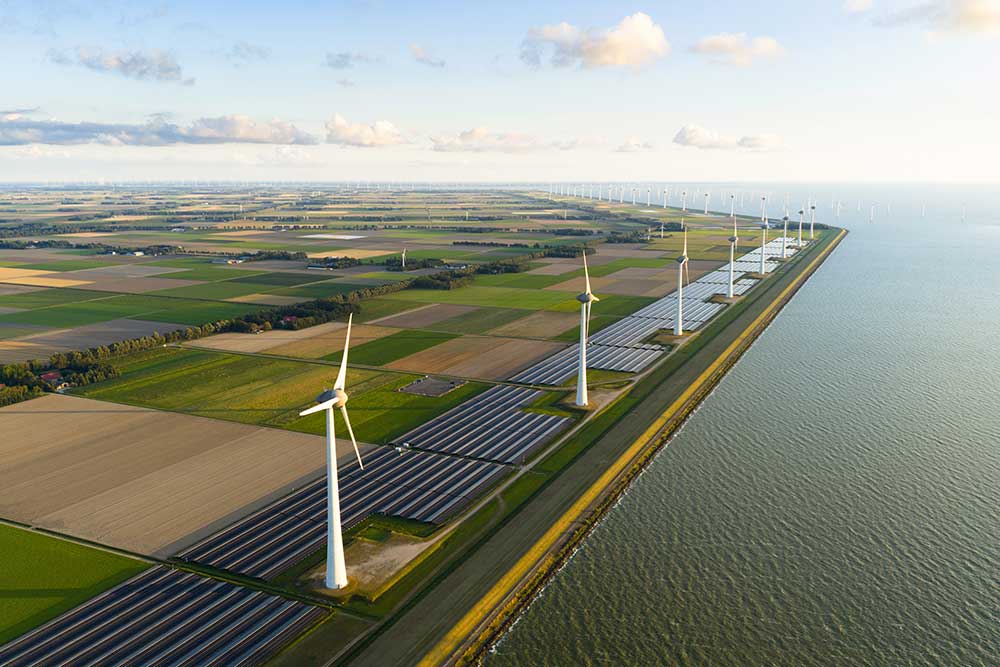
The European energy transition has achieved remarkable milestones, with solar photovoltaic (PV) capacity surging across the continent. Yet, as we move through 2026, the industry faces a growing paradox: the very success of solar deployment is creating significant headwinds for project profitability. Countries at the forefront of this transition, such as Germany and Portugal, are increasingly grappling with a market landscape defined by price cannibalization, extreme volatility, and rising curtailment rates.
To ensure the continued bankability and expansion of solar assets, the industry must pivot from a model centred solely on generation capacity to one focused on intelligent integration, with large-scale energy storage solutions emerging as the critical enabler.
The Profitability Crunch: A Growing Strain on Solar Assets
The rapid expansion of solar capacity—which has grown significantly since 2020—has fundamentally altered electricity price structures in Europe. Solar energy is inherently variable, and the simultaneous peak production across vast geographical areas during sunny hours leads to a phenomenon known as market cannibalization. When supply drastically outstrips demand, wholesale power prices often plummet, frequently reaching zero or negative values.
In mature markets like Germany and parts of the Iberian Peninsula, this volatility is becoming a structural challenge. Utilities are increasingly forced to curtail—or shut off—solar generation during these hours to protect grid stability. Recent data highlights the magnitude of this issue, with significant terawatt-hours (TWh) of solar output being curtailed across major European markets. For developers and asset managers, this directly impacts the bottom line, eroding the revenue potential of projects that were modelled on higher capture prices and uninterrupted output.
Storage: The Strategic Pivot
The path forward lies in transforming solar parks from passive generators into flexible, dispatchable energy assets. This shift requires the large-scale integration of energy storage technologies capable of decoupling electricity generation from consumption.
Battery Energy Storage Systems (BESS)
BESS is increasingly becoming the immediate solution for short-term arbitrage and grid stabilization. By co-locating BESS with solar farms, operators can capture energy during periods of excess generation—avoiding negative pricing—and discharge it during peak demand hours when prices are higher.
This "hybridization" model is rapidly gaining traction as a standard approach for new project development, allowing operators to participate in balancing and frequency regulation markets, further diversifying revenue streams beyond simple energy sales
Pumped Hydro Storage (PHS) and Underground PHS (UPHS)
While BESS excels at rapid, short-duration response, addressing the broader challenge of seasonal and long-duration energy imbalance requires more robust solutions. Traditional Pumped Hydro Storage (PHS) remains a critical cornerstone of European energy stability. Emerging advancements, such as Underground Pumped Hydro Storage (UPHS), offer promising potential to provide large-scale, long-duration storage capacity that is less reliant on specific geographical topographies than traditional surface-level hydro projects.
Integrating these larger-scale storage assets into the wider grid architecture is essential for managing the long-term variability inherent in a high-penetration renewable energy system, providing a necessary complement to the shorter-cycle capabilities of battery technologies.
Paradox of abundance
The current challenges in the European solar market are not a sign of failure, but rather growing pains of a rapidly maturing sector. The era of assuming perpetual profitability from simple generation is coming to an end. Success in the next phase of the energy transition will be defined by the ability to manage volatility and provide reliability to the grid.
For developers, investors, and policymakers, the message is clear: the future of solar profitability is inextricably linked to the deployment of intelligent, large-scale storage infrastructure. By embracing hybrid models and long-duration storage, the European energy sector can move beyond the "paradox of abundance" and build a resilient, profitable, and truly sustainable energy future.

