When the Wind Falters: How LargeScale Storage Orchestrates a Reliable Renewable Grid
April 2026
When the lights went out in the city one spring evening, people did what they always do: they checked their phones, lit candles, and called loved ones. But what they didn’t see was the unseen tug-of-war playing out across the grid — a chess match between gusting wind farms, bright midday solar, aging power lines and a handful of fastacting batteries trying to keep the pieces from crashing. That blackout was not a single failure; it was the symptom of a much larger problem: a power system designed for predictable flows now being asked to juggle weather, politics, and immediacy at a scale like never before.
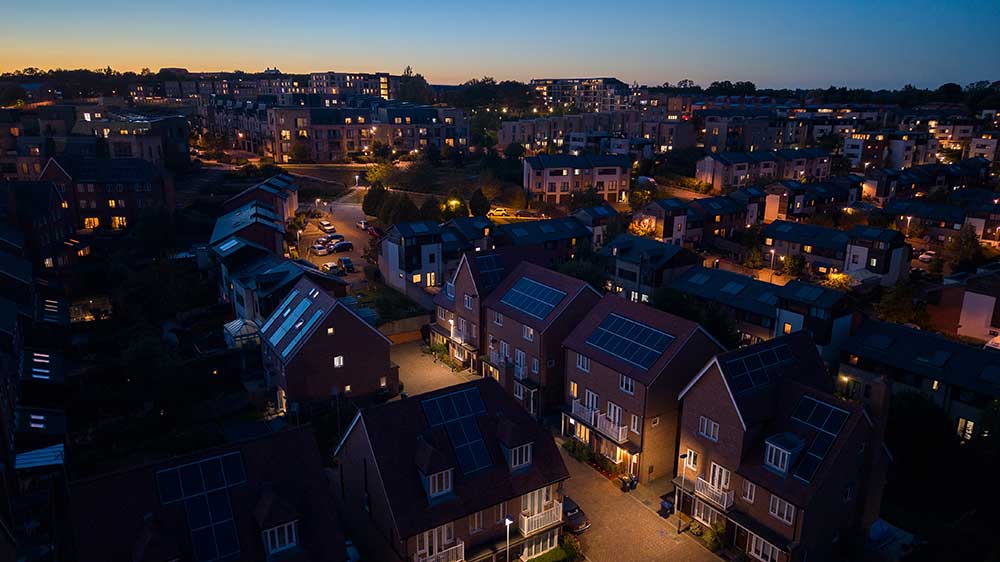
Energy companies today stand at that crossroads. The transformation to clean power has been astonishingly fast — deserts of solar panels and islands of turbines ride rising demand for lowcarbon electricity — but the grid beneath them was built for another era: large, centralized plants that produced steady baseload. Now supply arrives in bursts and lulls. Demand is spikier, expectations of alwayson service higher, and the consequences of error more public. The core challenge is simple to name but fiendishly complex to solve, matching supply and demand across seconds, hours, and seasons, while keeping costs down, permitting communities a say, and navigating supply chains and policy.
Enter storage: batteries, pumped hydro, and the scaled cousin of hydro, underground pumped hydro storage (UPHS). If the grid is a symphony, batteries are the virtuoso percussionist — instant, precise, and dazzling for short passages. BESS (battery energy storage systems) tame sudden ramps, stabilize frequency in milliseconds, and buy minutes to hours of flexibility. PHS and UPHS, by contrast, are the deepvoiced bass section — slower to move but able to hold a note for hours or days, shifting energy from sunrich noon to cloudy evening, or holding water in reserve for seasonal dry spells. Each technology solves a slice of the problem; together they form an orchestra.
But instruments don’t make a symphony on their own. PHS requires valleys, reservoirs and the political will to rework landscapes. UPHS promises similar scale where geography allows — vast caverns storing gravitational potential — but needs large civil projects and long financing horizons. Batteries bring modularity and speed, yet depend on finite minerals, lifecycle management, and evolving safety practices. Relying on one instrument alone risks failure: batteries alone struggle to cover multiday lulls, pumped storage alone can’t provide instantaneous grid stabilization at distribution scale, and both demand regulatory and market structures that value what they do.
The most compelling success stories aren’t about technology alone but about choreography. In places that have thrived through the energy transition, utilities paired transmission upgrades with diversified storage portfolios, layered shortduration batteries at critical nodes with bulk hydro storage in their hinterlands, and rewrote markets to pay for flexibility as well as energy. They leaned into advanced forecasting, demand response programs that turn millions of homes into flexible loads, and transmission planning that moves energy from windy coasts to sunrich interiors. Permit timelines were shortened through clearer environmental criteria and community benefit sharing. The result: fewer blackouts, lower peak prices, and a system that felt more resilient rather than brittle.
There’s also an economic narrative worth telling. Investors now see storage not as a cost centre but to unlock underused renewables, defer costly transmission projects, and monetize multiple revenue streams — reserve services, capacity payments, congestion relief, and energy arbitrage. When markets are adapted to recognize these stacked values, storage projects move from boutique pilots to mainstream infrastructure investments. That shift is what turns isolated success stories into systemic change.
The human story is the most important. Communities that once feared giant projects now see jobs, cleaner air, and energy sovereignty when planning is inclusive and transparent. Farmers who host reservoirs gain longterm lease payments; cities gain resilience hubs powered by batteries that can run hospitals and shelters through outages. The transition becomes not only technical but social — a negotiated reweaving of who benefits and who bears burdens.
Ultimately, largescale storage won’t be a silver bullet — it’s a powerful set of tools. The real imperative for energy companies is to think in portfolios and partnerships: combine batteries for speed, pumped hydro for scale and duration, smarter grids for coordination, and market and policy reforms that reward flexibility.
Do that, and the next time gusts swell the turbines and clouds hide the sun, the lights won’t just flicker back on — they’ll come on as if nothing happened, and a city that once feared outage will call it progress.

