Scaling Energy Storage to Balance the Nordic Grid — Strategic Imperatives for a Renewable-First Future
March 2026
The Nordics are transitioning faster than most regions from conventional thermal generation to high shares of variable renewables, electrified heat and transport, and more distributed assets. This transition delivers clear decarbonization benefits, energy independence and new economic opportunities — but it also amplifies the need for large-scale, flexible energy storage to preserve system balance, reliability and affordability. The question is not whether storage is required; it is what types, how much, where, and how to integrate them into market design and planning efficiently.
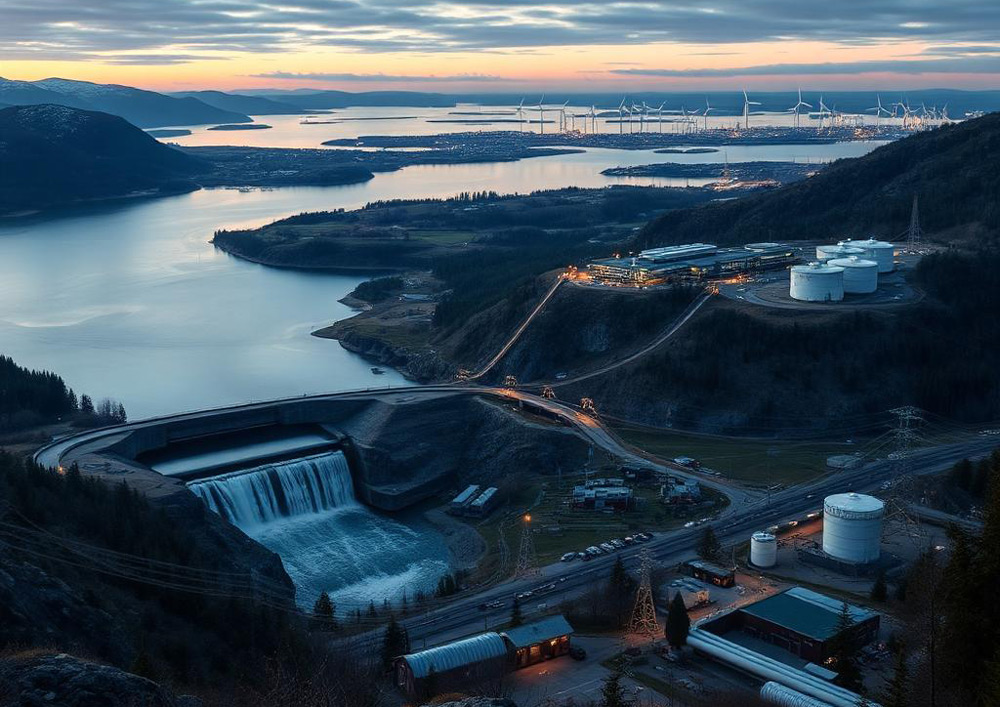
Why the Nordic grid needs large-scale storage now
Rapid renewable growth and variability: Offshore and onshore wind, and increasing solar at distribution level, create higher short-term and seasonal variability in net load. Hydropower’s role as a flexible backbone is substantial, but its seasonal storage is limited and operationally constrained by environmental and cross-border commitments as can be experienced currently with surging costs for electricity.
Electrification and demand shifts
Electrification of heating, industry and transport increases peak loads and changes load profiles, making peak shaving and ramping capacity more valuable.
The Nordics are ahead of most regions in replacing fossil generation with wind, solar and electrified heat and transport. That’s great for emissions and energy independence, but it also exposes a growing gap: we need large-scale flexible storage to keep the system reliable, affordable and operable through seasonal swings and rapid intra-day changes.
Why this matters now
Variable renewables are increasing.
Wind and distributed solar change net load patterns and create sharper ramps. Hydropower helps, but reservoirs and environmental constraints limit how we can use it.
Electrification changes demand.
Heat pumps, electric vehicles and industrial electrification shift peaks and increase the value of flexibility.
Interconnectors help but aren’t a panacea. Cross-border flows smooth variability but are limited by capacity, congestion and politics.
Grid stability needs are changing
Fast frequency response, synthetic inertia and quick ramping are now essential services that conventional plants may not supply efficiently.
What storage must deliver
Storage isn’t a single solution. Different needs call for different technologies
Seconds-to-hours: Lithium-ion BESS is the workhorse—fast, modular and already commercial for frequency response, congestion relief and intra-day shifting.
Several hours: larger battery systems, flow batteries or hybrid plants cover evening peak and renewable firming.
Pumped hydro is the cheapest where geography allows; for broader reach, hydrogen, underground storage, CAES and thermal storage tied to district heating are the realistic candidates.
Nordic strengths—and the catch!
Strengths:
Large hydropower fleet gives operational know-how and some seasonal buffering.
Strong regional markets and attractive investment climates.
Progressive policy frameworks that support clean tech.
Catch:
Suitable pumped hydro sites are limited and permitting is tough.
Heavy reliance on hydropower can mute commercial signals for private storage investments unless markets properly value scarcity and fast services.
What policymakers and market designers should prioritize
Pay for what storage uniquely provides. Create and standardize payments for fast reserves, inertia emulation and congestion management.
Strengthen time- and scarcity-pricing so storage can capture real value.
Allow revenue stacking. Market rules must let storage provide energy, reserves and grid services simultaneously.
Use targeted tools for nascent solutions: pilots, CFDs* or regulated models for long-duration and seasonal tech.
Integrate storage into grid planning - TSO* and DSO* planning must treat storage as an asset that can defer upgrades or act as a non-wires alternative.
Encourage hybrids and sector coupling. Facilitate projects pairing storage with renewables, electrolysers or district heating.
Practical deployment priorities
- Rapidly scale BESS where congestion and ramping matter - near urban load centres and interconnector nodes.
- Fund medium- and long-duration pilots (hydrogen, flow batteries, thermal storage) tied to real system needs so we learn quickly.
- Optimize hydropower operations and explore retrofit potential for pumped-hydro where it makes sense.
- Require lifecycle plans: recycling, second-life use and low-carbon manufacturing should be part of procurement.
Economic upside and risks
Storage deployment can grow local industry, create jobs and position Nordic firms as exporters of integrated solutions. Key risks: poor market signals leading to stranded assets, supply-chain constraints for batteries, and misaligned policies. Mitigate by diversifying chemistries, supporting recycling and keeping policy predictable and technology neutral.
Short and medium-term actions (practical)
0 - 5 years: Introduce paid fast-reserve products, update grid codes for inverter-based resources, and start targeted pilots for long-duration options.
5 - 15 years: Build multi-hour and seasonal capacity via a mix of pumped hydro (where possible), underground hydrogen, CAES and flow batteries, and harmonize regional market rules for scarcity pricing.
Bottom line
The Nordics have the technical, institutional and financial strengths to lead on large-scale storage. But leadership requires clear market signals, coordinated planning, and pragmatic pilots that turn today’s experiments into tomorrow’s backbone. Get those pieces right, and storage will unlock the full value of Nordic renewables while keeping the lights on affordably and securely.
* A CFD, or Contract for Difference, is a financial derivative that allows traders to speculate on the price movement of assets (like stocks, forex, or commodities) without owning the underlying asset. Traders profit from the difference between the opening and closing price, enabling leveraged, short-term trading in both rising and falling markets
* TSO most commonly refers to a Transmission System Operator, an entity responsible for operating and maintaining high-voltage electricity or natural gas infrastructure
* Days Sales Outstanding (DSO) measures the average number of days it takes a company to collect payment after a sale, serving as a key indicator of cash flow efficiency.

